Posts

Te Tiriti o Waitangi
Image
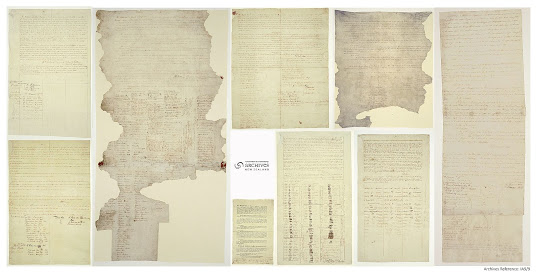
  Te Tiriti o te Waitangi  This topic stirs fire in my belly... and stirs a lot of connections to what I have previously heard and read.  It's one thing to be stirred by injustice, to have my mind opened to the facts - this is important and powerful. Brenda opened up this important conversation about the Treaty and injustice.  For me a next step is to be inspired by those who have stood up to racism, who have taken on the system, who have made a difference.  So...  What schools are really succeeding in this - how can I learn from them? Brenda mentioned Rotorua Boys School. Invercargill Middle School is another one who I have been inspired by.  What stories do I want to be sharing with my students? How can I change the script that they are hearing?  Do they know about:  -Willie Apiata -Dame Whina Cooper - Stan Walker  - Sir Āpirana Ngata - Billy T James - Hinewehi Mohi And the hundreds of other successful Māori. I love the book "Maori Her...

Toolkit - Autodraw

Image
  In my toolkit, I learned how to create media using the websites auto draw and remove.bg and then add them to Google Slides.  This helps students to create their own original media instead of taking something from an image search.  Auto Draw has a database of images and as you draw, it guesses what you are trying to draw. Then you can select the image you want, recolour, download and remove the background. You can make lots of great icons to add to websites / slides etc.  I think this would be a really fun way for kids to add visuals to their blogs, slides, writing pieces docs etc.  I also think some kids would try to be rude with it, so like most things, expectations and monitoring would be important.  A conversation around using the right tool for the job would also be helpful.  It would be sad if kids always used Auto Draw instead of challenging themselves to draw something on paper. It could take away from creativity - but also be a great enhancer...

Math Assessment - with Marie Hirst

  Mathematics Assessment Tools  Some of my takeaway ideas -  - Know the purpose of the assessment and why it was created  - Learning progression framework is something I'm not familiar with - it seems there are different tasks available with that.  - GLOSS was designed for 'mental strategies' which is not 'number'. Mental strategies are only a part of number.  - Basic facts need to be learnt fluently - easily, easily accessed. It doesn't have to be super quick. Timed basic facts tests can contribute to math anxiety. Let the kids drive it - what do they need?  - Classroom observations - these have the most weight. It was nice to hear this emphasised. I think this means having really good observation skills as a teacher and knowing what you are looking for.  - Rich tasks can include multiple AOs. Look at the depth of thinking in those rich tasks. Use measurement as your context for number and algebra to give purpose.  - Week of inspirational ma...

One of these things is not like the others

Image
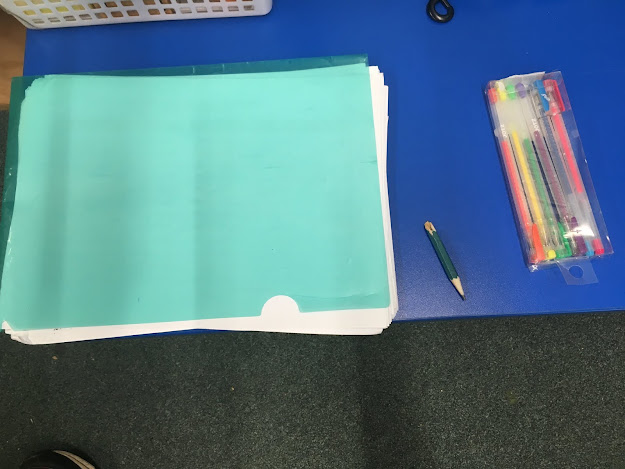
  During lockdown, I tried playing "One of these things doesn't belong," with students over our Google Meet. (I even tried singing the Sesame Street Song ) I'd seen a version of this activity used as a discussion starter in a few classrooms (using photos on a screen). I wondered if it would work with real objects. I hoped it would lead onto practising the Talk Moves.  In our Google Meets, I modelled the game with objects from my house. Then the kids found objects. It was fun trying to choose objects that had something in common but also a point of difference. I wondered if this game would work in class. I tried it with Room 2, having the students opt into small groups. We played the game 'which one doesn't belong' with the objects pictured above. I intentionally used the te reo kupu, pēpa, pene rakau and pene for paper, pencil and pens.   I notice that this game really encourages kids to say what they think and give a reason. Most kids want a chance to chi...

Dialectic Teaching with Susan Sandretto

  Dialectic Teaching with  Susan Sandretto In March, I was privileged to talk via Zoom to Susan Sandretto from the University of Otago about Dialectic teaching. This meeting was planned to support me in reaching my appraisal goals.  I have found out my notes from that meeting and have started to think more about how to implement dialectic teaching into my practise.  Main points from our Zoom Meeting:  - We make a distinction between talk rules (Talanoa) and talk moves and learning goals.  - Less is more. Build a foundation and layer up. Don't try to do it all at once.  - The default teaching method is often IRE (initiate, respond evaluate). This is only really effective for revision - not new thinking and learning.  - Pick a focus from the Talanoa rules or talk moves. Review at the end, "What did we get better at?" This promotes metacognition.  - Create a checklist in a modelling book. Include the learning goal and the talk moves that wi...

Netball Workshop with Tracey and Alice

Image
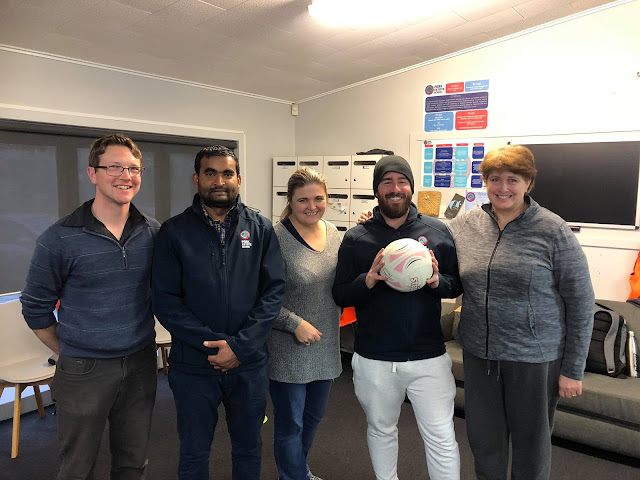
  Somehow the staff room survived without any major damage!!  The wether was very stormy - so we couldn't get outside. Not to worry, we improvised and used the staffroom as our netball court! Hilarious.   Where am I at? I don't know much about netball. I would put myself at 3 out of 10 before we started. Only because I like sport and know some ball skills.  What did I learn?   - coaching by questioning (making the students do the thinking rather than the coach 'telling')... hmmm sounds a lot like dialectic teaching!  - the different adaptations of netball for different ages - kids play sport for fun, teamwork, fair play, learning new skills, (winning is 81 on the list when kids were surveyed)  Reflection   - When I watch kids play games, they often don't keep score. but they will spit fire if someone doesn't 'play fair' according their view of fair. Perhaps fair play really is more important than winning for lots of kids.  Action St...

Toolkit - Smart Media - with Fiona Grant

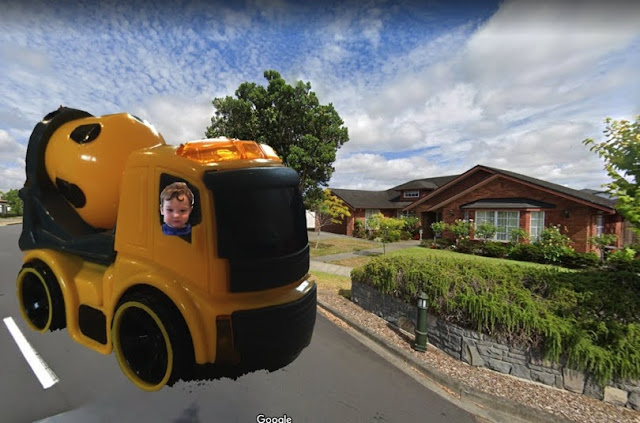
Image
  Smart Media with Fiona Grant   A recorded toolkit from Oct 19.  My brain is buzzing with the concepts and there are so many ideas to explore in the slides   Focus on Year 1-3.  Learn - students start by learning 'what is media'. This can happen through discussing images of people engaging in different types of media (using technology and tech free), sorting these images and noticing what is happening within these images. In doing this, students are 'tuning in' to the media that is around them.  - Super tip - select images the kids connect to (e.g. murals from around town and DLOs from other kids' blogs).  Students learn that people make images.  Students discuss fake and real images. As you view and evaluate images - you are constantly eliciting questions from students, helping them to think for themselves, encouraging their curiosity.  Create   Students can create their own 'fake' images by using sites such as explain everything...